Book Review: The Art Therapy Sourcebook by Cathy A. MALCHIODI
Book Review: The Art Therapy Sourcebook by Cathy A. MALCHIODI
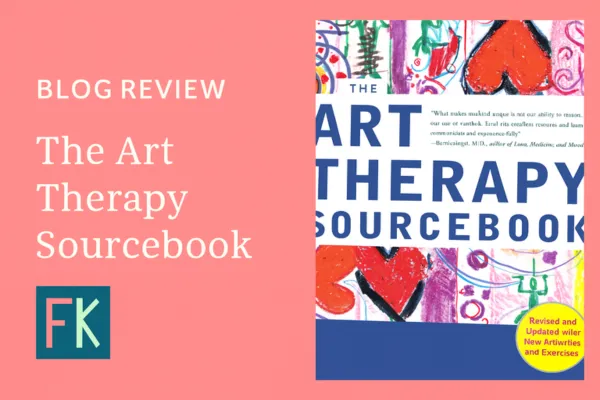
Before I began formal training in Art Therapy, I purchased The Art Therapy Sourcebook by Cathy A. Malchiodi. This book appeared in my research on art therapy, and with the title including the word “Sourcebook,” it immediately drew me in. What can I say about it other than that it truly is a source of information, guidance, and inspiration for anyone interested in art therapy? Even before I began my studies, this book became an invaluable resource in helping me understand the depth and breadth of art therapy and how it can be used as a tool for healing.
From the moment I opened it, I found myself integrating some of the practices into my own healing journey. Malchiodi writes in a way that feels both educational and deeply personal. The inclusion of case studies throughout the book was particularly helpful—they were perfectly balanced, offering real-world insight without overwhelming the reader with academic jargon. Through these stories, I began to see how art therapy can be used in diverse ways, tailored to meet each individual client’s needs and experiences.
This book gave me a clearer understanding of what art therapy truly is, and, just as importantly, what it is not. It is not about being an artist or creating something that looks “beautiful.” Rather, it is about giving a voice to the parts of ourselves that cannot speak in words. Art therapy offers a safe way to express and explore experiences, feelings, and memories that might otherwise remain trapped within us—without overwhelming us. Whether it is through drawing, painting, clay, writing, singing, dancing, or any other creative medium, each form of art becomes a unique language of expression.
What stood out most for me was how accessible the book is. Although it is an academic text, Malchiodi has written it in such a way that anyone could pick it up and find something valuable. Each chapter begins with a meaningful quote, setting the tone beautifully. One of my favourites is by Pat B. Allen: “Art is a way of knowing what we actually believe.” This quote resonates deeply with me because it captures what I have personally experienced, art helps uncover truths we might not even realise we hold.
Malchiodi also explores how artists throughout history have used art to heal, and one example she discusses is Frida Kahlo’s The Two Fridas. In this piece, Frida paints herself as two women, one as a bride and the other wearing traditional Mexican dress, connected through their hearts. The painting expresses her struggles with health, identity, and womanhood. Frida Kahlo is one of my favourite artists, so I was thrilled to see her included. Her art is raw, deeply personal, and a testament to how creativity can give form to pain and resilience. Kahlo’s ability to express her inner world visually is the essence of what art therapy represents, transforming suffering into understanding and giving a voice to what has no words.
There is so much to unpack in The Art Therapy Sourcebook. Malchiodi not only explains what art therapy is but also provides methods and practical ways to facilitate it. She shares a variety of activities, techniques, and reflective exercises, many of which I have already started incorporating into my own healing process. These practices have helped me connect more deeply with myself, and I can already see how they will shape the way I work with future clients.
What I appreciate most is that Malchiodi doesn’t present a “one-size-fits-all” model. Instead, she shows that there are endless ways to use art therapeutically and that the key is to adapt to each person’s needs. This flexibility and client-centred approach is exactly the kind of art therapist I aspire to be, someone who listens deeply, responds creatively, and trusts the process to unfold naturally.
This book has had the biggest impact so far on how I approach my own art therapy practice. It has become my go-to resource when I am looking for ways to support clients or when I need to reconnect with my own creative process. Every time I revisit it, I discover something new, an insight I missed before or a technique that suddenly feels relevant. It is one of those books that continues to grow with you, offering more each time you read it.
There is simply too much information to absorb in one sitting, and I know I will be returning to it many more times throughout my studies and beyond. Cathy Malchiodi has not only educated me about art therapy as a discipline but also inspired me to embody it in my life and work. She has shown me that art therapy is not just a profession, it is a way of understanding, connecting, and healing, both for others and for ourselves.
The Art Therapy Sourcebook is, without a doubt, one of the most powerful and practical resources I’ I have encountered. It sits at the heart of my growing toolkit as a holistic art therapist, guiding me toward the kind of practitioner I hope to become, one who honours creativity as the language of the soul and healing as an ever-evolving art.